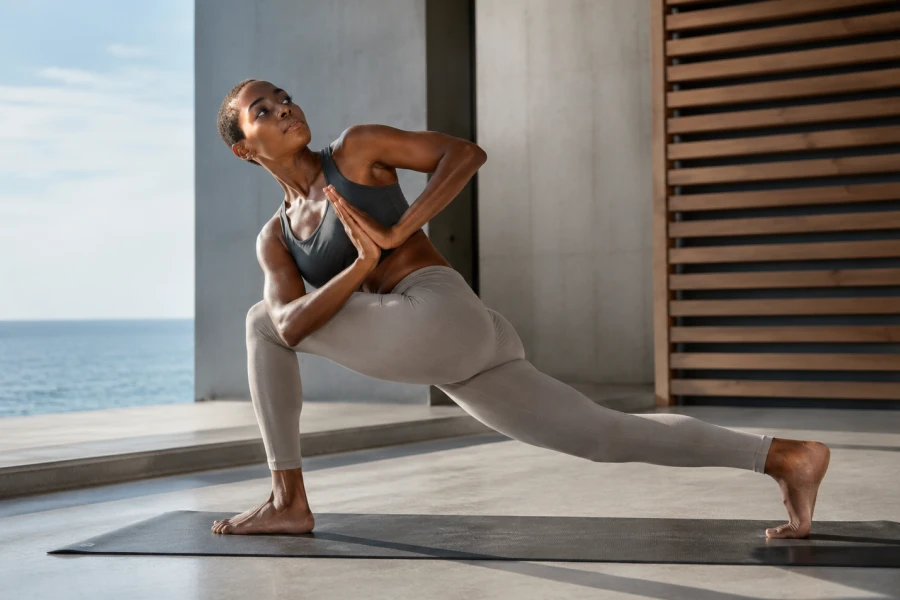
Workout plans often fail before they begin because they ask too much too quickly. Yoga offers a different route, combining strength, balance, mobility, and focused attention. Yoga workouts for weight loss can be useful when they encourage regular, enjoyable movement. The best session is not always the sweatiest or longest one. It is the session that fits your energy and still leaves you willing to practice again. That distinction protects motivation during busy weeks and low-energy days. You can create variety without constantly starting over. A short flowing sequence, a power-oriented class, or a mobility session may each have a place. The key is choosing purpose before intensity. Once you know what today’s session is meant to support, the practice becomes easier to shape.
Begin each session with one simple question: what do I need from movement today? Some days call for a stronger flow that challenges legs, shoulders, and core. Other days call for a slow practice that keeps the habit alive without draining you. Both choices can support a wider fitness goal when they are made intentionally. Explore yoga intensity options and low-impact fitness pathways for adaptable sessions. Choose an intensity that lets you maintain steady breathing and safe alignment. Pushing through sharp pain or dizziness is never the goal. As your fitness changes, the same sequence may feel completely different. This is why listening during the workout matters more than copying another person’s pace. Appropriate effort builds confidence, while reckless effort often interrupts progress.
A weekly rhythm gives movement a home on the calendar. Rather than scheduling seven identical workouts, assign different roles to different days. You might choose two stronger flows, one mobility session, and several walks. Those sessions can become the thread that connects those choices. Use weekly yoga planner and strength-focused flow ideas to organize variety. Leave at least one option that takes fewer than twenty minutes. That short session becomes your fallback when work, family, or fatigue changes the plan. Fallbacks are not lesser versions of discipline. They are how routines stay alive through normal disruption. A realistic schedule makes consistency feel less fragile.
Form changes the quality of every repetition, especially when movement is repeated often. In yoga, breath can help you notice when you are gripping, rushing, or losing control. Slow transitions may feel less dramatic, yet they often reveal where strength is developing. Pay attention to how the feet press, how the ribs stack, and how the neck relaxes. These details can make common poses more useful and more comfortable. If a shape does not work for your body, modify it without apology. Blocks, a chair, a wall, or a smaller range can keep the movement accessible. Good form is not about looking impressive in a photo. It is about creating a practice your body can trust. Trust is what lets you return often enough to learn.
As weeks pass, your sessions can develop alongside your fitness. The workouts do not need to stay fixed at one difficulty level. You may hold poses longer, add another round, or select a more demanding variation. You may also discover that a gentler day improves recovery after harder training. Find progressive yoga routines and body-aware modifications when you need options. Progress is not only more intensity. It can also look like clearer balance, steadier breath, or a more consistent schedule. Track those changes occasionally so the work does not become invisible. Then adjust one variable at a time rather than reinventing the entire routine. Gradual progression keeps your training both challenging and sustainable.
End every workout with a signal that the effort is complete. Take a few unhurried breaths, drink water, and notice how your body feels. That closing moment reinforces the idea that movement is care, not punishment. It can also reduce the impulse to judge the session by calories or exhaustion alone. Write one quick note about what felt strong and what felt awkward. Use that note to choose the next practice, not to criticize this one. Recovery may include sleep, nourishment, rest, or a gentler session tomorrow. All of those choices support the work you just did. When a workout ends with care, it becomes easier to begin again. This is how a routine earns longevity.
The most useful workout plan is one you can revise without abandoning. Yoga provides room for that kind of adaptability. It can challenge your muscles, invite focus, and create a durable movement habit. Build from the session length and intensity that feels possible right now. Keep a short option ready for difficult days. Let your body’s feedback shape the pace of progression. Over time, the workouts may become less about chasing a result and more about building capacity. That capacity supports every part of an active life. It also makes consistency feel like a resource rather than a test. Choose the next session with that bigger picture in mind.


Leave a comment