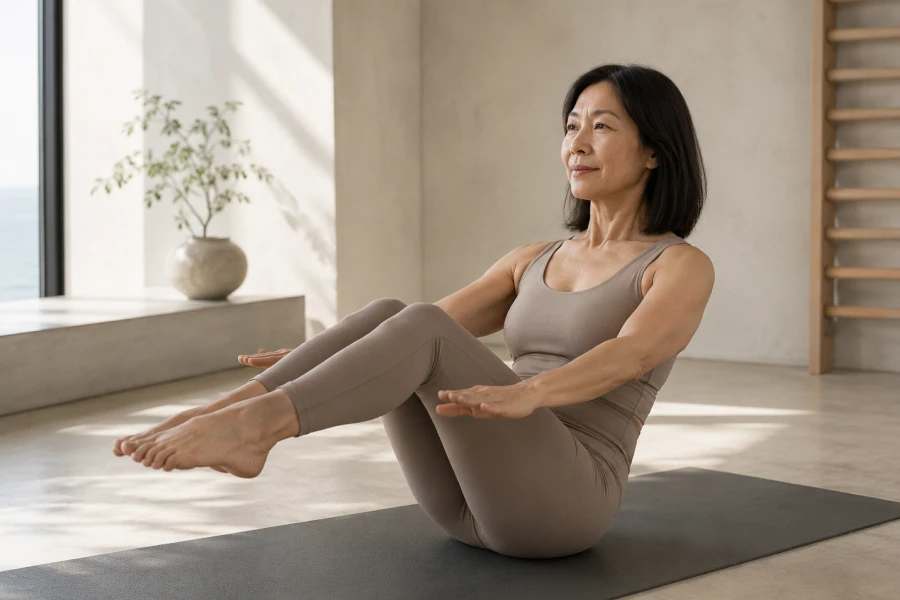
Beginning a new movement practice can feel strangely public, even when you are alone at home. You may worry about getting the sequence wrong or looking awkward in familiar poses. Pilates asks for attention, which can make every small wobble feel louder at first. Pilates for beginners becomes more inviting when learning replaces performing. You are not expected to master every movement during the first session. You are there to notice breathing, alignment, and the feeling of controlled effort. That mindset creates room for curiosity rather than self-criticism. It also makes modifications feel like smart choices instead of shortcuts. With patience, the unfamiliar movements begin to make practical sense. The practice grows more satisfying because you can feel yourself understanding it.
Every useful beginner session begins with a smaller goal than you think you need. Choose one focus, such as steady breathing or a comfortable neutral spine. Let that single focus guide the rest of the practice. This keeps your attention from scattering across ten new instructions at once. Explore beginner Pilates moves and foundational mat practice for a simple entry point. Notice which cues help you feel stable and which cues feel confusing. You can repeat a movement slowly until the pattern becomes clearer. Repetition is not boring when it teaches you something new each time. The aim is awareness, not a long list of completed exercises. By narrowing the focus, you give your body room to learn safely.
Pilates often feels subtle because the work is organized around control. A movement may look small while asking your trunk, hips, shoulders, and breath to cooperate. That does not mean every sensation should feel intense. Learn to distinguish a challenging muscle effort from sharp pain, numbness, or joint discomfort. Pause when something feels wrong instead of trying to push past it. If you have injuries, symptoms, or medical concerns, seek individualized guidance before progressing. Good instruction should help you adjust range, position, or resistance. Your body is not failing because a variation fits better. It is giving you information you can use. Respecting that information creates a practice you can continue.
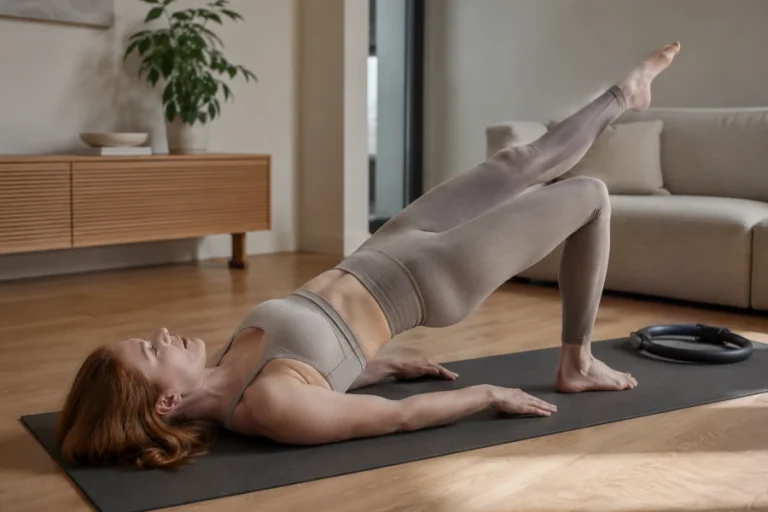
Early Pilates practice rewards patience with the basics. Start with movements that teach breathing, pelvic control, shoulder placement, and spinal awareness. You may work on tabletop positions, bridges, toe taps, or gentle abdominal preparation. Each one becomes more useful when the range stays comfortable and deliberate. Keep Pilates breathing techniques and posture improvement habits nearby for clearer cues. Count fewer repetitions than you think you should, then make each one precise. Quality gives your nervous system a reliable pattern to remember. Rushing usually turns the exercise into something else entirely. Slow practice lets you detect tension before it becomes a problem. That awareness is one of the most valuable skills you can build.
Your first routine does not need a special studio, expensive machine, or long schedule block. Clear enough floor space, comfortable clothing, and a mat can be sufficient. Choose two or three movements and repeat them once or twice each. End before fatigue changes your form beyond recognition. That may mean a ten-minute session, which is a perfectly legitimate beginning. Add time only after the routine feels familiar rather than overwhelming. Prepare the space before you begin so the first minutes feel uncomplicated. Turn off distractions that invite you to rush or compare yourself. When the setup is calm, you can give the movements your full attention. This is how a small practice becomes a dependable ritual.
Confidence often arrives after you have repeated the same choice several times. The method can make that process visible because the movements are deliberately detailed. One week, you may notice your shoulders relaxing more easily. The next, you may hold a tabletop position without holding your breath. Use low-impact fitness plan and simple Pilates modifications to keep progression realistic. These changes may seem quiet, but they often make everyday movement feel steadier. Getting out of a chair, carrying groceries, or climbing stairs can feel more organized. Notice those practical wins alongside anything you see on the mat. They remind you that the practice has a purpose beyond looking advanced. Repetition transforms uncertainty into useful familiarity.
Questions are part of a thoughtful practice, not evidence that you do not belong. Ask how a movement should feel and where you are compensating. Ask whether a prop, wall, or smaller range would make the exercise more accessible. Use qualified instruction when you need help interpreting a cue. Then take the version that fits your body seriously. Beginner work is not less meaningful than advanced work. It is the stage where good habits have the most room to take hold. Give yourself permission to practice slowly and revisit the basics often. That patience can save you from frustration and unnecessary strain. It can also make the whole process more enjoyable.


Leave a comment