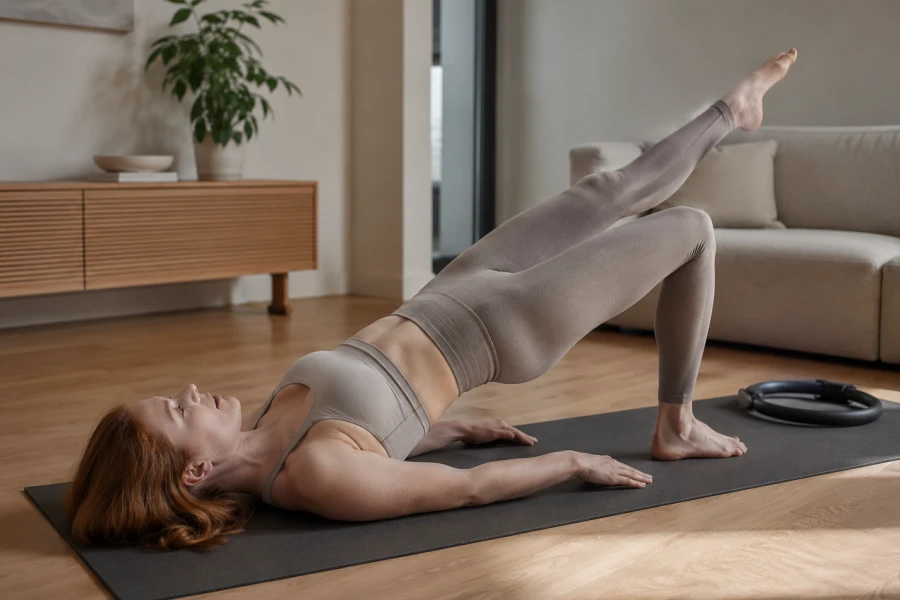
A routine becomes real when it fits into an actual Tuesday. Not the imagined Tuesday with extra energy, empty rooms, and no competing responsibilities. A beginner pilates routine should respect the time you honestly have available. That might be twelve minutes before work or fifteen minutes after dinner. The exact time matters less than the fact that it returns each week. When the session is small enough to protect, it becomes easier to trust. You do not need a complicated program to begin building movement consistency. You need a clear starting point and a sequence that feels familiar. From there, repetition turns planning into practice. This is how a modest routine begins to feel like part of your life.
Look for one consistent opening in your day before choosing exercises. Perhaps it is after coffee, between meetings, or before the evening shower. Put the mat nearby before that moment arrives. Preparation makes the first step easier when your attention is limited. Choose a window that appears at least twice each week. Consistency does not require daily sessions to be meaningful. Explore home Pilates workout and weekly movement rhythm for practical scheduling ideas. Once the time is chosen, protect it with a small promise. You are only committing to start, not to have a perfect workout. Starting is often the hardest part, so make that threshold low.
Begin with a handful of movements that teach different skills. You might include a warm-up, a hip-focused exercise, a core pattern, and a gentle finish. Choose versions you can perform with steady breathing and comfortable alignment. Do not add new exercises simply because the first ones now look familiar. Familiarity is where precision begins to grow. Keep beginner Pilates moves and gentle core practice available for a simple menu. Repeat the same sequence for two weeks before changing a major element. This gives you time to notice what feels stronger and what needs adjustment. It also keeps each session from becoming a test of memory. Less variety can produce more learning at the beginning.
A clear internal shape benefits the practice. Start with a brief arrival, then move into preparation, focused work, and a calm finish. The opening might include breathing, pelvic tilts, or gentle spinal movement. The middle can feature a small group of controlled exercises. Finish with a minute of easy mobility or rest before standing up. This sequence tells your nervous system what to expect. Predictability can make practice feel safer, especially after a stressful day. It also makes it easier to spot which section needs a change. When the arc stays clear, even a short session feels complete. That feeling of completion makes repetition more appealing.
Breath gives the practice a rhythm that equipment cannot provide. Use an easy inhale to prepare and a steady exhale to support the work. You do not need to force your breath or make it theatrical. You simply need enough attention to notice when you are holding it. Breath holding often signals that the range, load, or pace is too demanding. When that happens, reduce the challenge and return to steadiness. This approach can help you make better choices during every repetition. It also turns the session into a pause from the day’s rush. Good breathing does not make a movement effortless. It makes the effort clearer and more manageable.
Busy weeks do not require a complete reset. The session can shrink without losing its identity. On packed days, choose the warm-up, one favorite movement, and a minute of rest. That three-part version keeps the cue alive without draining your schedule. Use short Pilates sessions and AI workout prompts when you need a practical fallback. On calmer days, return to the full sequence without punishment or make-up sessions. The routine should bend around life, not break when life changes. Flexibility is the difference between a temporary challenge and a long-term habit. By keeping a small option ready, you remove the excuse that there is no time. Sometimes ten minutes is exactly what continuity needs.
Progress does not need a complicated record, but it helps to notice it. After each session, ask one short question: what felt more controlled today? Your answer might be balance, breathing, shoulder tension, or confidence starting. Write a few words if that helps, but do not turn the review into homework. Every few weeks, consider whether one movement deserves a slightly different variation. Change only when your current version feels steady and comfortable. This prevents growth from becoming a race. It also helps you recognize that skill often develops quietly. Small improvements compound when the routine remains in place because the body remembers repeated patterns and organizes movement with less conscious effort. Observation lets you see the payoff of returning, especially during weeks when progress feels too quiet to notice.


Leave a comment