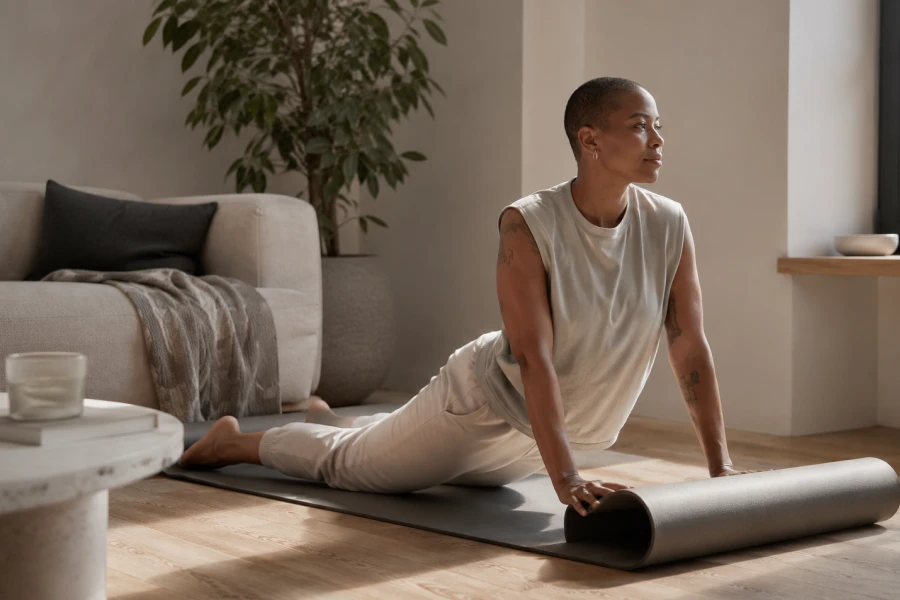
A home practice does not need to announce itself with racks of equipment or a perfectly styled room. It only needs enough clear space for you to move with attention and comfort. How to start pilates at home becomes less intimidating when you remove the unnecessary setup pressure. A mat, comfortable clothes, and a stable surface may be all you need initially. The simplest version often gives you the best chance of beginning this week. You can learn the essentials before deciding what tools might genuinely help later. This keeps spending from becoming a substitute for practice. It also lets your living room remain a living room when the session ends. With fewer barriers, the first class or sequence feels more approachable. That approachability is the strongest resource a new habit can have.
Choose a spot where you can extend your arms and legs without knocking into furniture. Move a small table or clear a corner rather than waiting for an entire room to be empty. Good light and a comfortable temperature can make the experience more inviting. You do not need a mirror unless it truly helps you follow an instructor. Check that the floor feels stable beneath a mat or towel. Keep water nearby, but avoid clutter that distracts you from the movement. Explore home Pilates workout and beginner-friendly setup ideas for simple options. The goal is functional, not photogenic. A space that takes two minutes to prepare is a space you will use more often. Practical convenience matters more than decorative perfection.
Equipment can be useful, but it is not the place to begin. Your first priority is finding instruction that matches your current experience and needs. Choose a short mat sequence with clear demonstrations and calm pacing. Watch once if necessary, then practice a few movements with care. Learn what neutral alignment, breathing, and controlled range feel like in your body. Keep beginner Pilates moves and guided mat foundations available for early sessions. After a few practices, you will understand whether a ring, band, or small ball would add value. Buying later gives you a more informed reason for each item. It also prevents a pile of unused equipment from becoming another obstacle. Start with skill, then add tools only when they solve a real problem.
Beginning at home often comes down to reducing decisions before the session begins. Choose a repeatable time, a short sequence, and one place where the mat lives. Lay out your clothes or unroll the mat before your usual practice window. When the cue arrives, you can begin instead of renegotiating the plan. Keep the first sequence small enough that you remember its order. A familiar structure may include a warm-up, two focused movements, and a quiet finish. You can follow an instructor, but avoid switching programs every day at first. Familiarity makes it easier to notice technique and progress. It also makes practice feel less like another decision-heavy part of the day. Less friction gives consistency room to grow.
Leave a subtle visual cue in the place where you want the habit to happen. A rolled mat beside the sofa or a folded towel in a basket can be enough. You do not need to turn your room into a permanent exercise display. Instead, make the equipment easy to reach and easy to put away. This balance respects both your home and your routine. Create a closing ritual after each practice, such as rolling the mat and opening a window. The ritual tells your brain that the session had a beginning and an end. It can also make the space feel refreshed rather than crowded. When the setup remains simple, returning does not require extra emotional effort. Your environment can quietly invite practice without taking over your home.
Low motivation is not a sign that the home practice has failed. It is a normal condition that every habit needs to survive. Starting during those moments means having a smaller version ready. Choose three minutes of breathing and one familiar exercise rather than skipping automatically. Try short Pilates sessions and AI workout prompts when you need a low-barrier reset. You may continue after the first few minutes, or you may decide the small session is enough. Either choice keeps the relationship with practice intact. The goal is not to force intensity from an exhausted body. The goal is to make beginning feel possible more often. A flexible option prevents one hard day from becoming a long break.
A home practice can expand gradually once the basics feel secure. You might add a slightly longer session, explore a new movement family, or use a small prop. Let your confidence and comfort determine the pace. If you have pain, injuries, pregnancy, or medical concerns, seek personalized advice before progressing. Good instruction can help you choose modifications that fit your needs. Revisit foundational movements even as you add variety. They often reveal new details as your awareness improves. The practice does not need to become complicated to stay interesting. It only needs to continue offering a useful challenge. Gradual growth keeps that challenge sustainable.


Leave a comment